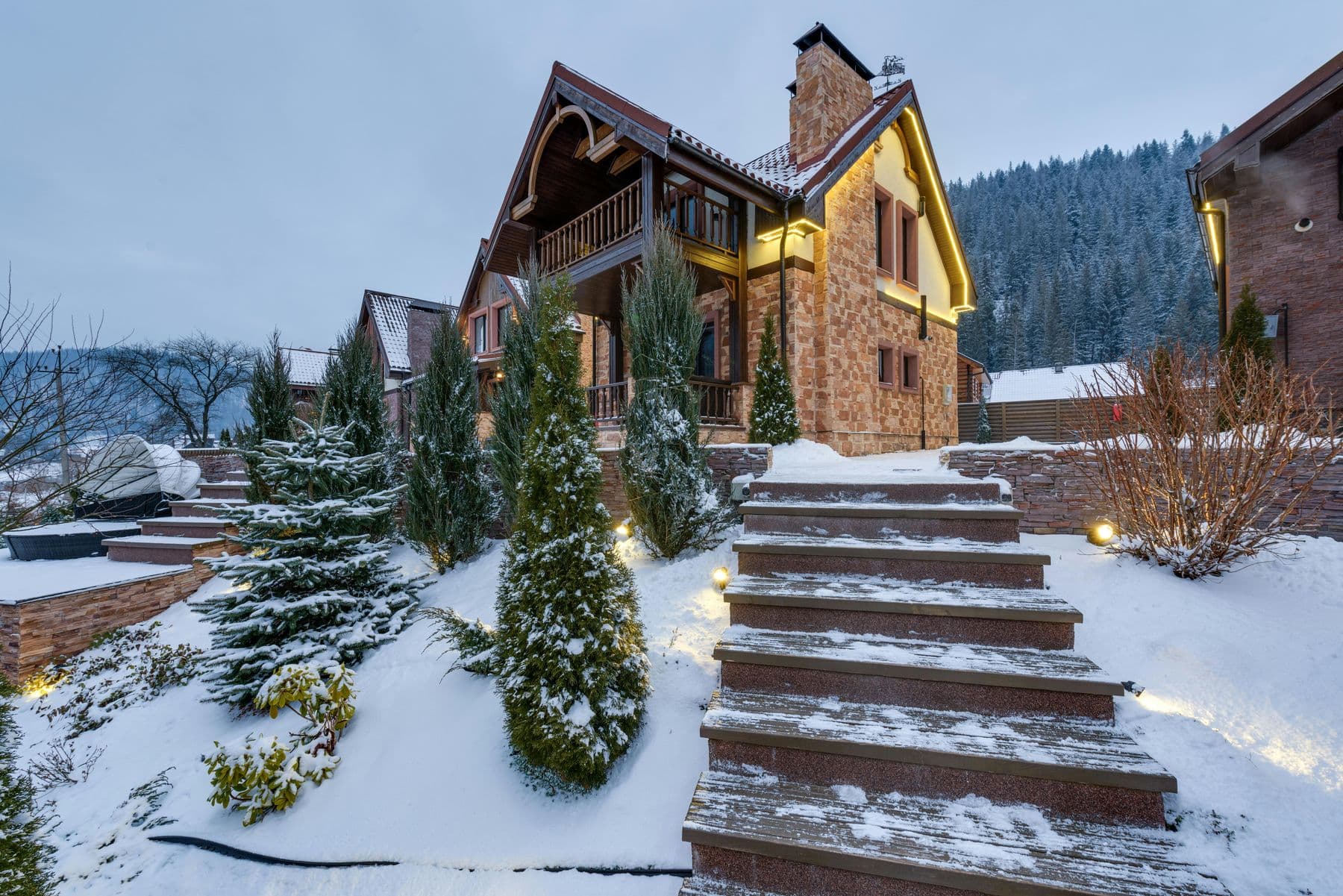
Mountain homes are built to look good against the peaks, with steep and complex rooflines, timber, stone and big windows. They also spend months under snow, and the Bow Valley's swings between freezing and thawing are hard on every part of the building envelope. These are the things I spend extra time on when I inspect a home in Canmore or Banff.
How ice dams form
An ice dam starts when heat from the house warms the underside of the roof. Snow on top melts, the water runs down to the colder eaves, and it freezes again. Over time a ridge of ice builds along the edge of the roof. Meltwater backs up behind it, works its way under the roofing and can leak into the attic, the walls or the ceilings below.
Ice dams are usually a sign of something else: heat getting into the attic through gaps in insulation and air sealing, or an attic that isn't ventilated well enough to stay cold.
What I look at
From the outside
- The roof covering, with extra attention to valleys, where two slopes meet and snow and water collect
- Flashing at walls, chimneys, skylights and dormers, where most leaks start
- Signs of past ice damming: stained fascia, damaged eaves and gutters, and icicles in winter
- Gutters and downspouts, and where the water goes once it leaves them
From the inside
- Attic insulation depth and gaps, and air leaks from the house into the attic around lights, fans and hatches
- Attic ventilation, and frost or staining on the roof sheathing
- Water stains on ceilings and walls below the eaves and valleys
Thermal imaging helps here. On a cold day it shows where warm air is escaping and where insulation is missing, often in exactly the places where ice dams form. It is included in every inspection, not an add-on.
Decks and balconies
Many mountain homes have several decks and balconies, some of them over living space. Snow sits on them all winter and melts slowly in spring. I look at how each one is attached to the house, the condition of the framing, railings and stairs, and, on balconies over rooms, the waterproofing and drainage. A failed membrane on a balcony often shows up first as a stain on the ceiling below.
Drainage on sloped lots
Spring runoff and rain need somewhere to go. On a sloped lot, water often runs toward the house from uphill. I check the grading, window wells, downspout discharge and the foundation for signs of moisture so you know whether water is being managed or is finding its way in.
Why it matters when you buy
None of these items is unusual on its own, and most can be fixed. The point of the inspection is to know about them before you commit, so you can plan the work, price it in or ask questions. For larger and custom homes, the RMHI Signature inspection gives these areas the time they need.
If you are buying in the Bow Valley, you can book online or call me on 780-224-1151.
Kyle Dowdeswell, Certified Master Inspector®, Rocky Mountain Home Inspections, Canmore